Investment Strategies: 10 Types Explained, With Real Examples
 Julia Villaran
Investment strategies are the rules you follow to decide what to buy, when to buy it and when to sell. The main types are buy-and-hold, dollar-cost averaging, value, growth, income, index, momentum, real estate, asset allocation and socially responsible investing. Each balances risk, return and effort differently, so the best investment strategy is the one that fits your goals, your time horizon and how much risk you can live with.
Key takeaways
There are ten common investment strategies; most investors combine two or three rather than picking just one.
For beginners, index funds and dollar-cost averaging are the simplest good investment strategies: low cost, low effort, broad diversification.
Active strategies (value, growth, momentum, event-driven) can beat the market but take research, discipline and a higher tolerance for losses.
Below you'll find real, closed trades from TruthSayer AI's funded account showing how value, event-driven and institutional-flow strategies work in practice, including the losses.
Types of investment strategies at a glance
The table compares the different investment strategies by risk, effort and who they suit. Use it to shortlist two or three before reading the detail below.
| Strategy | How it works | Risk | Effort | Best for |
|---|---|---|---|---|
| Buy-and-hold | Buy quality assets and keep them for years | Medium | Low | Long-term investors |
| Dollar-cost averaging | Invest a fixed amount on a schedule | Low–medium | Low | Beginners, regular savers |
| Index investing | Own the whole market through a fund | Medium | Very low | Beginners |
| Value investing | Buy stocks priced below what they're worth | Medium | High | Patient, research-minded investors |
| Growth investing | Buy fast-growing companies | High | Medium | Higher risk tolerance |
| Income investing | Hold assets that pay dividends or interest | Low–medium | Medium | Retirees, cash-flow seekers |
| Momentum investing | Follow stocks already trending up | High | High | Active traders |
| Real estate | Property or REITs for rent and appreciation | Medium | Medium–high | Diversifiers |
| Asset allocation | Spread money across stocks, bonds and more | Varies | Low–medium | Everyone, as a framework |
| Socially responsible | Invest in line with your values (ESG) | Medium | Medium | Values-driven investors |
Basic investment strategies for beginners
If you're just starting, keep it simple. The three basic investment strategies below need little time and protect you from the most common beginner mistakes: trying to time the market and putting too much into one stock.
Index fund investing
An index fund owns every company in an index, such as the S&P 500, so one purchase gives you hundreds of companies. Fees are low and you never need to pick stocks. Over the long run the S&P 500 has returned roughly 10% a year on average, though individual years vary widely. For most beginners, this is the core of a good investment strategy.
Dollar-cost averaging (DCA)
Dollar-cost averaging means investing the same amount at regular intervals, say every month, whatever the price. When prices fall your money buys more shares; when they rise it buys fewer. It removes the temptation to time the market and builds a saving habit. Setting up an automatic transfer to your brokerage account is the easiest way to do it.
Buy-and-hold
Buy-and-hold means buying quality companies or funds and keeping them through ups and downs, often for a decade or more. It works because of compounding and because it avoids the costs and mistakes of frequent trading. The hard part is emotional: holding through a 20% market drop without selling.
Active investment strategies in the stock market
Active investment strategies in the stock market try to beat the market rather than match it. They need more research and carry more risk, and most active managers fail to beat their benchmark over long periods. Here are the main ones, with real examples where we have them.
Value investing
Value investors buy companies the market has priced below their true worth, judged with measures like the price-to-earnings ratio or a discounted cash flow model, and wait for the price to catch up. It takes patience: undervalued stocks can stay undervalued for a long time.
For a full walk-through of the screens, ratios and a worked Microsoft example, see our guide on how to find undervalued stocks.
Real example. TruthSayer AI's Valuations AI© model flagged Microsoft (MSFT) as undervalued and bought on 8 April 2026 at $375.38. The position closed on 25 September 2026 at $517.51, a 37.8% gain after 170 days. Not every value call works: a position in Utz Brands (UTZ) opened in July 2025 was closed in September 2026 for a small loss (−0.6%) after more than a year of waiting. Both trades were made with real money in a funded brokerage account.
Growth investing
Growth investors buy companies expected to grow revenue and earnings much faster than average, even at high valuations. The upside can be large, but growth stocks fall hard when expectations slip, so this suits investors with a higher tolerance for swings.
Momentum investing
Momentum investing buys what is already rising and sells what is falling, on the idea that trends persist for a while. It relies on technical analysis and fast decisions, and sudden reversals are the main risk.
Event-driven investing
Event-driven strategies trade around specific events such as earnings reports, mergers or index changes, where prices tend to move in predictable ways for a short time.
Real example. TruthSayer AI's Earnings AI© model trades around earnings announcements. It shorted Knight-Swift Transportation (KNX) on 21 October 2026 at $63.12 and closed two days later at $60.17, a 4.0% gain. Event trades also lose: a long position in General Electric (GE) opened on 19 October 2026 closed three days later at −9.0%. Earnings AI positions are held for 31 days on average.
Following institutional money
Some strategies track what large institutions are doing, for example through unusually large trades reported from dark pools (private trading venues used by big funds), on the idea that big money often moves before prices do.
Real example. TruthSayer AI's Dark Pools AI© model bought ServiceNow (NOW) on 2 July 2026 at $131.99 after unusual institutional activity and sold on 25 September 2026 at $136.70 (+3.3%). A similar signal on Enbridge (ENB) in August 2026 closed at −7.0% four weeks later.
Income and real estate investment strategies
Income investing
Income investing builds a steady stream of cash from dividends, bond interest or rent. Dividend-paying stocks, government and corporate bonds, and dividend funds are the usual building blocks. It appeals to retirees and anyone who wants regular cash flow with lower volatility.
Real estate investing
Real estate earns rental income and tends to appreciate over time. You can buy property directly or invest through real estate investment trusts (REITs), which trade like stocks and pay out most of their income as dividends. Property also helps diversify a stock-heavy portfolio and can hedge against inflation.
Asset allocation and tactical allocation
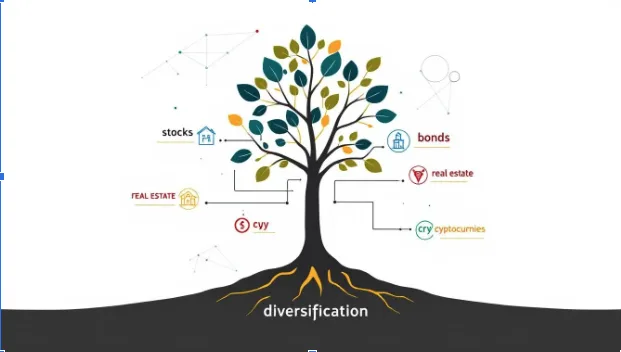
Asset allocation is less a strategy than the framework that holds the others together: how much you put in stocks, bonds, cash and other assets. A longer time horizon allows more in stocks; a shorter one calls for more in bonds and cash. Rebalancing once or twice a year keeps the mix on target.
Tactical asset allocation adds flexibility: temporarily shifting away from your target mix to take advantage of market conditions, then returning to it. It can add returns but requires judgment and close monitoring.
Socially responsible investing (SRI)
Socially responsible investing, also called ESG or sustainable investing, picks companies by their environmental, social and governance record as well as their financial prospects. It lets you invest in line with your values, and the growth of ESG data and funds has made it much easier to do.
How to choose a good investment strategy
Set your goal and time horizon. Retirement in 30 years and a house deposit in three call for different strategies.
Be honest about risk. If a 30% drop would make you sell, favour index funds, DCA and income strategies.
Decide how much time you'll spend. Passive strategies need minutes a month; active ones need hours a week.
Combine strategies. A common mix is an index-fund core with a smaller active portion for value, growth or event-driven ideas.
Judge results on real money, not backtests. Ask any service for its live trade record, wins and losses included.
If you want to add active ideas without doing all the research yourself, TruthSayer AI sends the same entry and exit alerts its funded account trades, across value, earnings and institutional-flow strategies. See the full record on the GIPS performance page, or compare tools in our guides to the best AI stock apps and AI stock investing.
FAQs
What are the main types of investment strategies?
The main types are buy-and-hold, dollar-cost averaging, index investing, value, growth, income, momentum, real estate, asset allocation and socially responsible investing. Event-driven and institutional-flow strategies are more active variants used by hedge funds and quant traders.
What is the best investment strategy for beginners?
For most beginners, a low-cost index fund bought through dollar-cost averaging is the best starting point. It is diversified, cheap and needs no stock picking, which avoids the most common beginner mistakes.
What is a good investment strategy for the stock market?
A good stock market strategy matches your goals and risk tolerance and is one you can stick with. Many investors keep a diversified index core and add a smaller active portion, such as value or growth stocks, rather than trying to beat the market with everything.
How does dollar-cost averaging work?
You invest a fixed amount at regular intervals regardless of price. Because the same amount buys more shares when prices are low, your average cost per share is smoothed out and you avoid trying to time the market.
Do active investment strategies beat the market?
Sometimes, but not reliably. Most actively managed funds trail their index over long periods after fees. If you use an active strategy, judge it on a real, published track record that shows losses as well as wins.
This article is for educational purposes only and is not investment advice. Trade examples are real closed positions from TruthSayer AI's funded account; past performance does not guarantee future results.
Julia Villaran
With a strong foundation in business development and consultancy, Julia has a keen analytical approach to risk-managed portfolio growth. Her strategic insight and market expertise make her a trusted advisor for individuals and organizations navigating the complexities of today's investment landscape. She combines deep market understanding with a research-driven approach to help uncover high-potential investment opportunities and build resilient financial strategies.